
All About Air Quality Solutions for Sacramento Valley Homes

Why Air Quality Solutions for Sacramento Valley Homes Matter More Than You Might Think
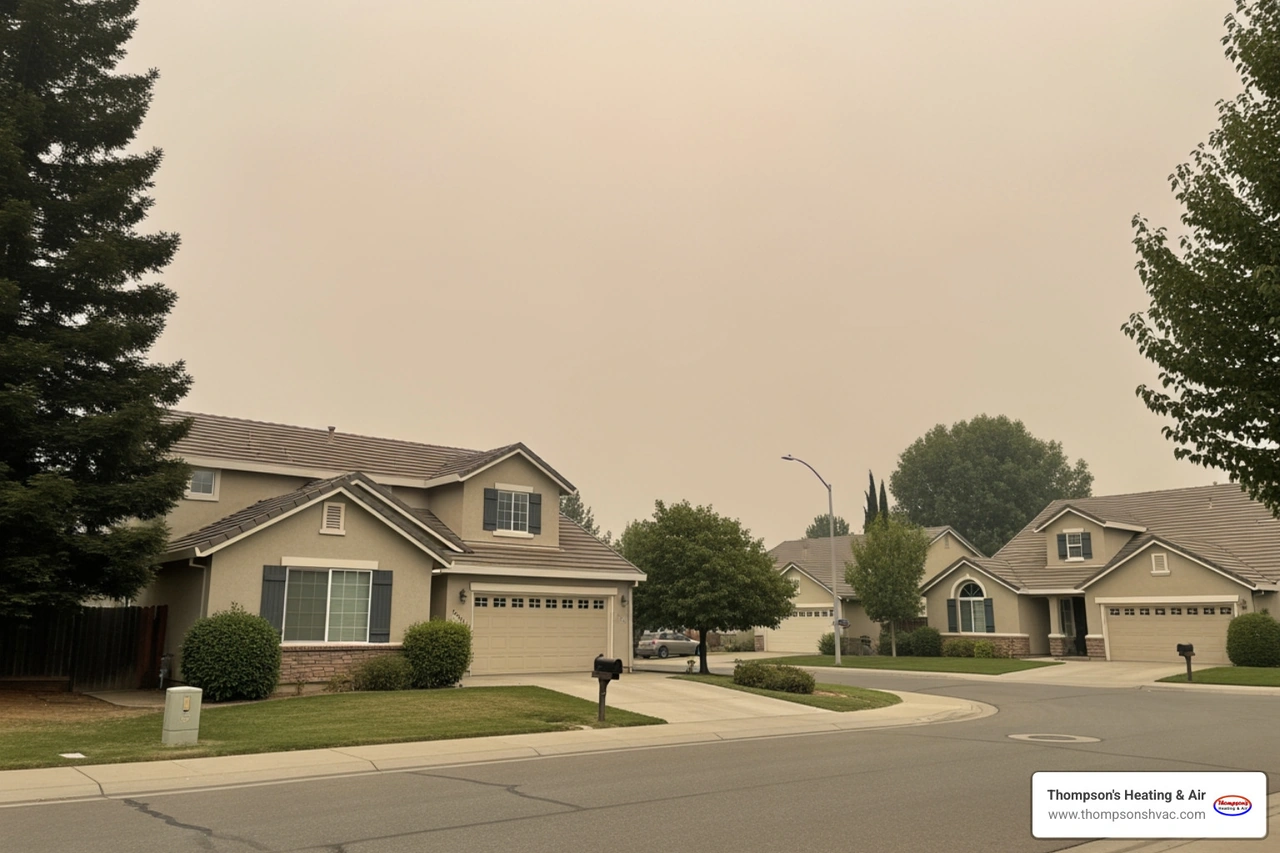
Air quality solutions for the Sacramento Valley homes are not a luxury — they are a genuine health priority for families living in one of California's most pollution-challenged regions. Between wildfire smoke rolling in from the Sierra Nevada foothills, agricultural dust drifting across the valley floor, and high pollen counts peaking every spring, the air outside is often far from clean. And here is the part that surprises most homeowners: according to EPA studies, the air inside your home can be two to five times more polluted than the air outdoors.
That gap happens because modern homes are built tighter than ever for energy efficiency. Less air escapes — but that also means pollutants like dust, pet dander, mold spores, and volatile organic compounds (VOCs) get trapped inside with you and your family.
The good news: there is a clear, layered approach that works.
Top air quality solutions for Sacramento Valley homes at a glance:
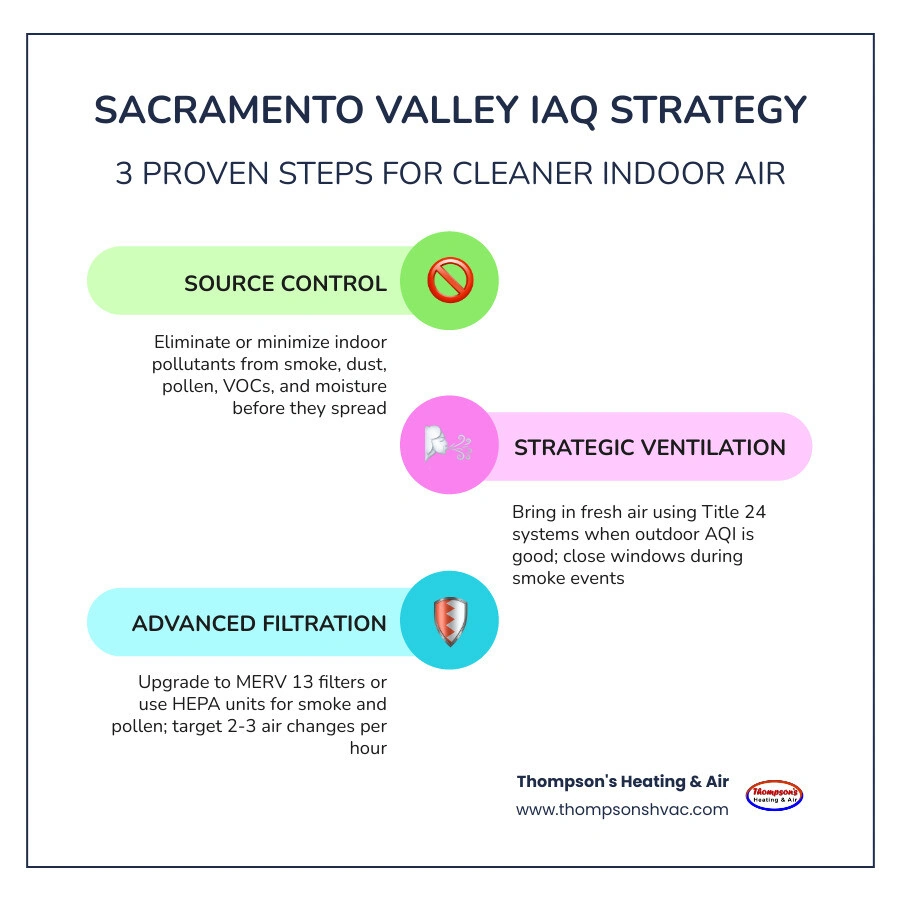
1. Reduce pollution at the source — eliminate or minimize indoor pollutants before they spread
2. Improve ventilation — bring in fresh air strategically, especially when outdoor AQI is good
3. Add the right filtration — upgrade HVAC filters to MERV 13 or use HEPA-equipped portable units for smoke events
4. Control moisture — keep indoor humidity between 30–50% to prevent mold growth
5. Avoid harmful devices — skip ozone generators; choose CARB-certified air cleaners only
6. Know your local programs — Sacramento Valley residents may qualify for free HEPA units through the Clean Air Rooms Program
This guide walks you through each of these steps in detail, with practical advice tailored to the Sacramento Valley's unique climate, geography, and regulations.
Air Quality Solutions for the Sacramento Valley Homes: Start With the Biggest Local Problems
In Woodland, Davis, West Sacramento, Winters, Dixon, Natomas, and nearby Yolo County communities, indoor air quality is shaped by a very local mix of issues: valley-trapped particulates, seasonal pollen, dry dust, and recurring wildfire smoke. Add tightly sealed homes, pets, cleaning products, cooking fumes, and occasional moisture problems, and indoor air can get messy fast.
The most common indoor pollutants in Sacramento Valley homes
The biggest pollutants we see in local homes usually fall into three categories:
• Particles: PM2.5 from wildfire smoke, dust, pollen, pet dander, and mold spores
• Gases: VOCs from paint, cleaners, flooring, furnishings, and hobbies; carbon monoxide and nitrogen dioxide from combustion appliances
• Biological contaminants: mold, bacteria, viruses, and dust mites
Radon can also be a concern in some homes, especially when there has never been testing.
Wildfire smoke deserves special attention here. Fine smoke particles are tiny enough to drift deep into a home through gaps, open doors, leaky ducts, and lower-quality filters. Spring pollen and agricultural dust are not far behind. If your furniture seems dusty five minutes after cleaning, your air is telling on itself.
How these pollutants affect comfort and health
Poor indoor air quality is not just annoying. It can affect comfort, sleep, concentration, and long-term health.
Common effects include:
• Sneezing, itchy eyes, and allergy flare-ups
• Asthma triggers and breathing irritation
• Headaches, fatigue, and dizziness
• Musty or stale smells
• Poor sleep and throat dryness
• Increased risk for vulnerable people, including kids, older adults, and anyone with heart or lung conditions
Research consistently shows indoor air can be two to five times more polluted than outdoor air. That is one reason source control matters so much. If pollution starts indoors, filtration alone cannot always save the day.
Signs your home may have an air quality problem
Watch for clues like:
• Dust buildup soon after cleaning
• Allergy symptoms that get worse at home
• Musty odors or damp smells
• Dry eyes, headaches, or brain fog
• Uneven airflow between rooms
• Frequent filter clogging
• Visible spots around vents or near the air handler
If these sound familiar, our guide on how to improve indoor air quality at home is a helpful next read.
Source Reduction, Ventilation, and Air Cleaning: What Works Best First
The most effective approach usually starts in this order:
1. Reduce pollution sources
2. Ventilate wisely
3. Add air cleaning and filtration
That order matters. Buying a purifier while ignoring mold, duct leaks, or heavy cooking fumes is a little like spraying air freshener in a gym bag. Technically an effort, yes. A complete solution, no.
Air quality solutions for the Sacramento Valley homes should begin with source control
Source control means reducing what gets into the air in the first place. Good examples include:
• Do not smoke indoors
• Use low-VOC paints, cleaners, and household products
• Run the range hood when cooking
• Use bathroom exhaust fans during and after showers
• Fix leaks quickly
• Keep indoor humidity controlled
• Use a shoes-off policy to reduce tracked-in dust and contaminants
• Vacuum with a HEPA-equipped vacuum
• Seal leaky ductwork so it does not pull in attic dust or insulation fibers
This step is especially important in the Sacramento Valley, where outdoor dust and smoke can sneak in through gaps and poorly sealed duct systems.
When ventilation helps and when it can make air worse
Ventilation is helpful when outdoor air is reasonably clean. It is less helpful when the AQI is poor because of wildfire smoke or heavy pollution.
Best practices:
• Open windows when outdoor AQI is good
• Use kitchen and bathroom exhaust fans regularly
• Keep windows and doors closed during smoke events
• Check local AQI before bringing in outside air
• In newer California homes, mechanical ventilation may already be required under Title 24
Energy-efficient homes often need a controlled ventilation strategy, not just random window opening. In some homes, an ERV can help exchange stale indoor air for filtered outdoor air while limiting energy loss. But during active smoke events, the best move is often the opposite: close up the house and rely on filtered recirculation.
Why air cleaners work best as part of a full plan
Air cleaners are valuable, but they work best after source control and smart ventilation are addressed.
A strong plan may include:
• A better central HVAC filter for whole-home particle control
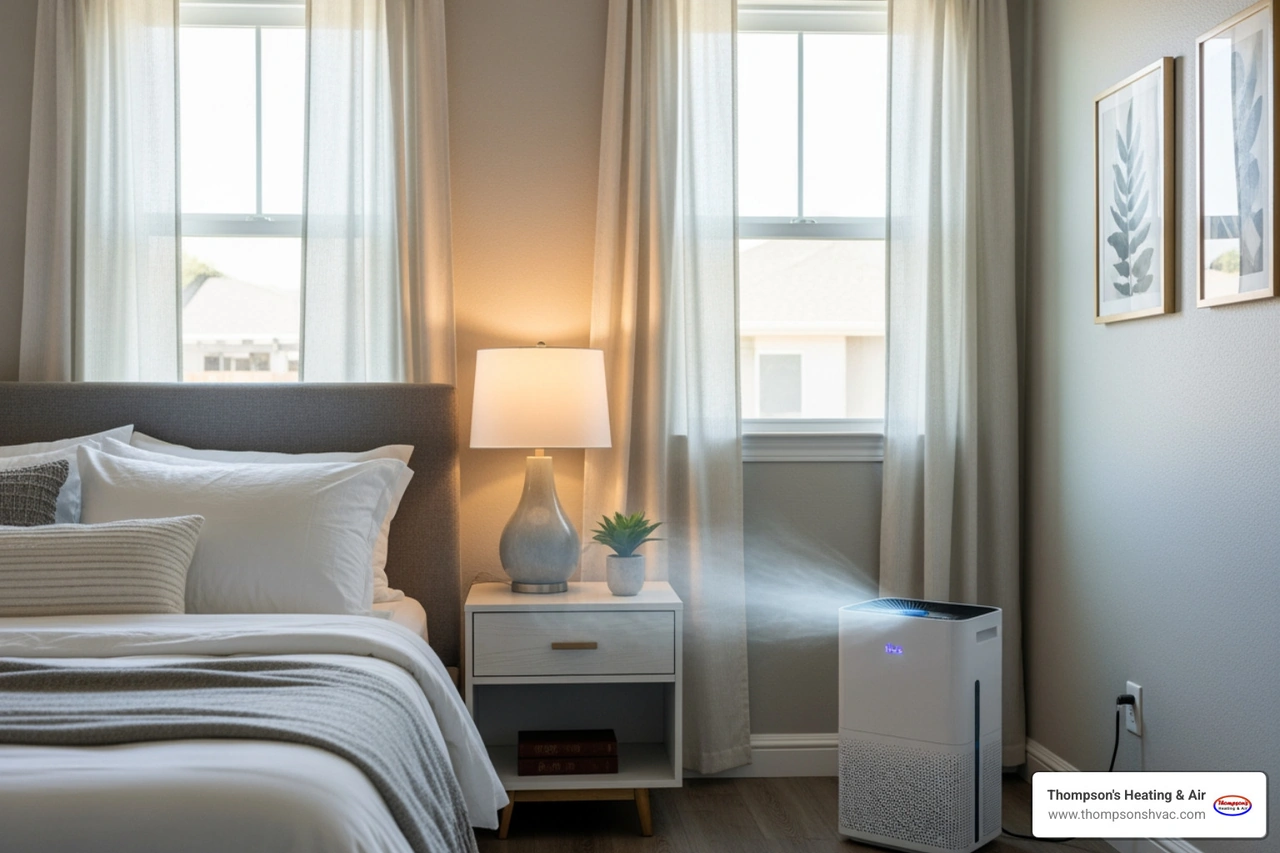
• A portable HEPA unit in the bedroom or living room
• Activated carbon for odors and some gaseous pollutants
• Continuous or extended fan circulation during poor air periods
• A dedicated clean air room during wildfire events
Learn more about whole-home options on our Indoor Air Quality page.
Choosing Filters and Purifiers for Air Quality Solutions for the Sacramento Valley Homes
Filtration can be confusing fast, mostly because packaging loves big promises. The key is knowing what the ratings actually mean.
• MERV 8 — Best for: Basic homes, larger dust control — What it captures well: Larger dust, lint, some pollen — Notes: Good baseline, limited smoke capture
• MERV 11 — Best for: Better allergy support — What it captures well: Smaller particles, more pollen, more dander — Notes: Good balance in many systems
• MERV 13 — Best for: Smoke season, stronger particle control — What it captures well: More than 90% of 1 to 3 micron particles and more than 90% of 3 to 10 micron particles — Notes: Often ideal if system can handle it
• HEPA — Best for: Portable purifiers and special applications — What it captures well: 99.97% of particles at 0.3 microns — Notes: Excellent for smoke and fine particles, but not usually drop-in for standard HVAC systems
What MERV ratings are best for most Sacramento homes
For many homes in our area:
• MERV 8 is a solid minimum for everyday protection
• MERV 11 is often a nice upgrade for allergies and dust
• MERV 13 is commonly the sweet spot for better filtration, especially during wildfire season
MERV ratings run from 1 to 20, and higher numbers remove smaller particles more effectively. But higher is not automatically better for every system. A filter that is too restrictive can reduce airflow and strain equipment.
That is why filter depth matters too. A 4-inch or 5-inch deep pleated media filter usually provides better filtration with less airflow restriction than a 1-inch high-MERV filter. In many cases, upgrading the filter cabinet is smarter than stuffing the highest-rated 1-inch filter you can find into the slot and hoping for the best.
HEPA vs MERV filtration: what each does best
HEPA filters are the gold standard for particle removal. They capture at least 99.97% of particles at 0.3 microns, including very fine smoke particles. That makes them excellent for portable room purifiers and clean air rooms.
But whole-house HEPA is not usually a simple retrofit for a standard central system. True HEPA creates substantial airflow resistance, so it often requires special design to avoid bypass and performance issues.
In practical terms:
• Use MERV 11 or MERV 13 in compatible central HVAC systems for whole-home improvement
• Use HEPA in portable units for bedrooms, nurseries, home offices, or smoke-event protection
For more on filtration options, visit our Air Filtration page.
Which air cleaning technologies are worth considering
The best technologies depend on the pollutant:
• Mechanical filtration: best for dust, pollen, smoke, and dander
• Activated carbon: helpful for odors, cooking smells, and some VOCs
• Electronic air cleaners: can capture fine particles, but maintenance matters
• UV-C lights: helpful for biological growth in HVAC equipment, especially near coils
• Air scrubbers and multi-stage systems: useful when homes have both particle and odor concerns
No single device does everything perfectly. For many Sacramento Valley homes, the strongest setup is layered: media filtration plus targeted HEPA, plus moisture control or UV if needed.
You can also explore our Air Purification services.
Portable Room Units vs Whole-House HVAC Systems
Both approaches can work. The right one depends on whether you need to protect one room or the entire house.
How to choose between portable and central air cleaning
Choose a portable unit when:
• You want to protect a bedroom, nursery, or home office
• Someone in the house has asthma or smoke sensitivity
• You need a fast clean air room during wildfire season
• Your home does not have central ductwork
Choose a whole-house system when:
• You want filtration in every room served by the HVAC
• Dust, pollen, and pet dander are house-wide problems
• You want a cleaner look with less noise and fewer plug-in units
• Your central system runs regularly and is compatible with upgraded filtration
Portable units are great for targeted relief. Whole-house systems are better for broad, continuous treatment. Many homes benefit from both.
What size air cleaner you need for rooms and whole-home use
For portable units, size matters a lot. Look at CADR and room-size guidance, not just marketing language.
Aim for enough cleaning to provide about 2 to 3 air changes per hour in the room, and more during smoke events if possible.
Sizing factors include:
• Room square footage
• Ceiling height
• Whether doors stay open or closed
• Number of occupants
• Pets
• Smoke or odor load
• Desired air changes per hour
• Actual fan speed used, not just the highest lab setting
For whole-home systems, sizing is about HVAC airflow, duct layout, filter cabinet dimensions, and static pressure. This is where professional review helps, because a good filter on a struggling system is still a struggling system.
How to improve and maintain your existing HVAC filtration
Simple steps can make a big difference:
• Check your filter monthly
• Replace filters more often during wildfire smoke periods
• During heavy smoke, inspect every 7 days
• In severe conditions, filters may need replacement every 2 to 4 weeks
• Ask whether your system can support MERV 13
• Consider a deeper pleated media cabinet if it cannot
• Keep return grilles clean and unobstructed
• Address duct leakage and airflow issues
Some homeowners also benefit from running the fan more often for continuous filtration. More on that in the FAQ below.
If dust and moisture problems may be connected to your duct system, our article on how clean ducts reduce mold risk in your home is worth reading.
Ozone Safety, Extra IAQ Technologies, and Moisture Control
Not every air-cleaning device sold online is a good idea. Some are ineffective, and some can make indoor air worse.
Why ozone-generating air cleaners are a bad idea
Ozone-generating devices should generally be avoided in homes. Ozone can irritate the lungs and worsen breathing issues, especially for children, seniors, and people with asthma.
California has taken this seriously. CARB-certified air cleaners cannot emit more than 0.050 parts per million of ozone. Even so, our recommendation is simple: choose ozone-free solutions whenever possible.
Also worth skipping as primary solutions:
• Devices that intentionally produce ozone
• Tiny desktop air cleaners that are too small for the room
• Houseplants as your main air strategy
Plants are nice. We like plants. But they are not going to win a cage match against wildfire smoke.
How to identify CARB-certified safer air cleaners
When shopping for an air cleaner in California, look for:
• A CARB certification label on packaging or product literature
• Confirmation the unit is approved for sale in California
• Clear ozone emission information
• Preference for units marketed as ozone-free
This matters most during smoke season, when families may buy equipment in a hurry. A safe device should not solve one air problem by adding another.
When UV, ERVs, and humidity control make the biggest difference
Some extra technologies are very helpful in the right situations.
UV lights:
• Best for controlling biological growth on coils and inside air handlers
• Helpful if you have recurring musty smells or mold concerns
ERVs:
• Helpful in tighter homes that need balanced fresh air
• Most useful when outdoor conditions are acceptable and ventilation is otherwise limited
Humidity control:
• Aim for 30% to 50% indoor humidity
• Too much humidity encourages mold growth
• Too little can worsen dryness, irritation, and comfort issues
If you suspect hidden growth in the system, see our guides on signs of mold in your HVAC system and mold prevention tips for the Sacramento Valley homeowners. For dry-season comfort, our article on whole house humidifier benefits for dry climates can help.
Local Programs, Testing, and Professional Help in the Sacramento Valley
Good indoor air quality is not one-size-fits-all. A home with pets, allergies, and smoke exposure needs a different plan than a remodeled home with VOC concerns or an older home with duct leakage.
Free and low-cost help during wildfire smoke events
Some Sacramento Valley residents may qualify for support through the Clean Air Rooms Program. This program can provide free air filtration units to eligible households in qualifying communities.
Why it matters:
• HEPA units can reduce indoor particulate matter by more than 90% in a well-sealed room
• A dedicated clean air room can protect the most vulnerable members of the household
• Proof of residency is typically required for program applications
Even if a household does not qualify, the clean-air-room concept is still valuable: choose a room with few windows and doors, keep it closed, and run a HEPA purifier there during smoke events.
When to schedule indoor air quality testing
Testing is worth considering when:
• Symptoms persist even after filter upgrades
• You suspect mold, moisture, or biological growth
• You recently remodeled and notice odors or irritation
• You want combustion safety checked
• One room feels consistently worse than the rest of the home
If you need a professional evaluation, learn more about air quality testing in Woodland CA.
Getting the right long-term indoor air strategy for your home
At Thompson's Heating & Air, we believe the best results come from matching the solution to the home. That can include:
• Reviewing filter compatibility
• Checking static pressure and airflow
• Inspecting duct condition and leakage
• Looking for moisture issues
• Recommending targeted room or whole-home upgrades
We have served Yolo County communities since 1992, and we understand how local smoke, dust, pollen, and dry conditions affect homes here. You can explore our indoor air quality services in Sacramento CA and indoor air quality in Woodland CA to learn more.
Frequently Asked Questions About Sacramento Valley Home Air Quality
Should I run my HVAC fan on Auto or On for better air quality?
If your system and filter are in good shape, running the fan on On can improve air quality by increasing circulation and filtration time. This can be especially helpful during smoke periods or allergy season.
That said, it may also increase filter loading, so the filter should be checked more often. If you are unsure whether your system is a good candidate for continuous fan operation, we can help review it.
How often should I check or replace my filter during wildfire season?
During active wildfire season, check filters every 7 days. In heavy smoke conditions, filters can load much faster than usual and may need replacement every 2 to 4 weeks.
A clogged filter can reduce airflow, hurt comfort, and lower filtration performance, which is the exact opposite of what you want when the air outside already looks like a campfire had a bad day.
Can indoor plants replace an air purifier or better filtration?
No. Indoor plants may be pleasant, but they are not a practical substitute for real air cleaning. They do not provide the airflow, particle capture, or smoke removal needed for whole-room or whole-home protection.
If your main concern is smoke, pollen, dust, dander, or fine particulates, use proper filtration or a HEPA purifier instead.
Conclusion
The best air quality solutions for the Sacramento Valley homes are layered, local, and practical. Start by reducing pollution at the source. Add smart ventilation when outdoor air is clean. Upgrade filtration to the best level your system can handle. Use HEPA where targeted protection matters most. Avoid ozone-generating devices, and do not ignore humidity, duct condition, or mold risk.
In places like Woodland, Davis, West Sacramento, Winters, Dixon, and surrounding Yolo County communities, air quality is not just a comfort issue. It is a year-round part of protecting your family, especially during wildfire and pollen season.
If you are ready for a healthier indoor air plan, explore our indoor air quality products.



.avif)
.avif)
.png)
