
A Practical Guide to How Pets Affect Filter Changes

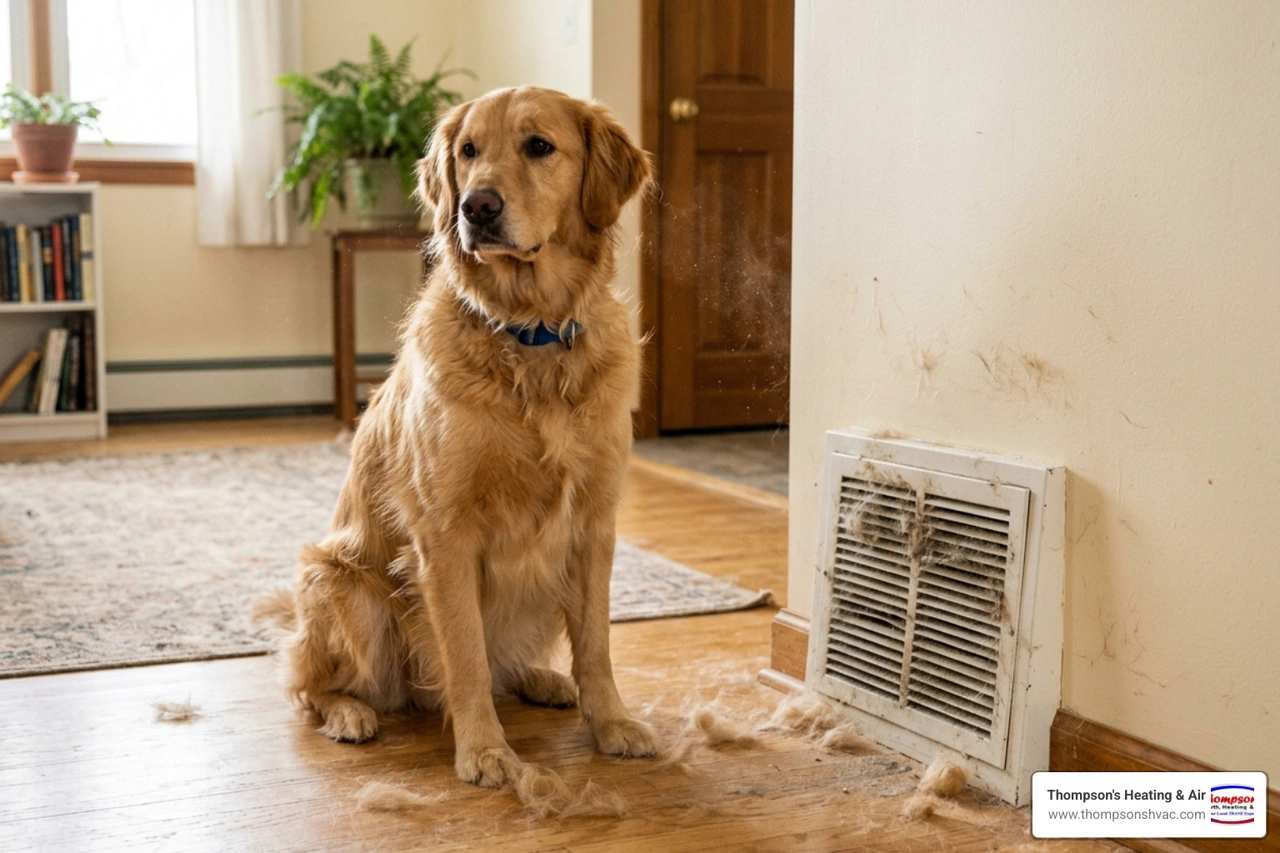
How Pets Affect How Often You Change Your Filter — What Woodland Pet Owners Need to Know
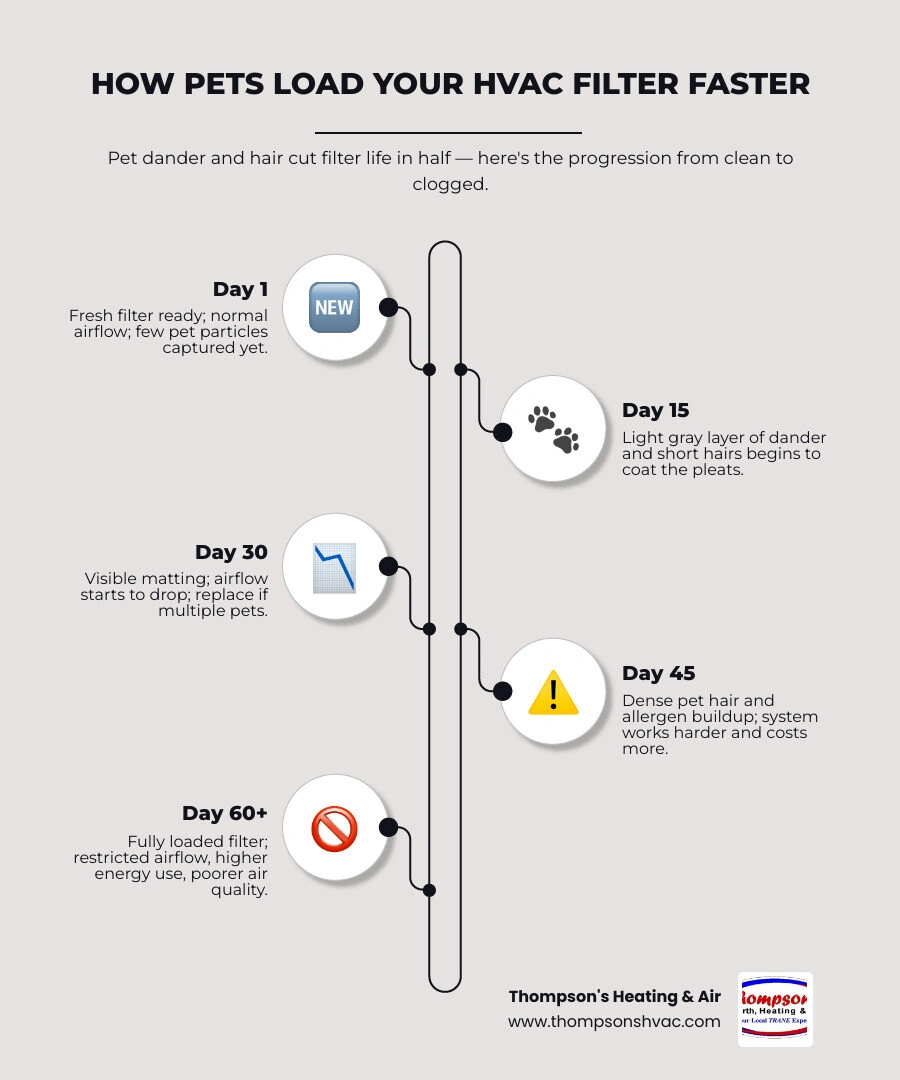
How pets affect how often you change your filter is simpler than you might expect: pets load your HVAC filter with hair, dander, and microscopic allergens far faster than a pet-free home ever would — often cutting filter life in half or more.
Here is a quick-reference guide to get you started:
• No pets — Recommended Filter Change Frequency: Every 90 days
• 1 small or low-shedding pet — Recommended Filter Change Frequency: Every 60 days
• 1 large dog or multiple pets — Recommended Filter Change Frequency: Every 30–45 days
• Multiple pets or heavy shedders — Recommended Filter Change Frequency: Every 30 days or sooner
• Pets + allergy or asthma sufferers — Recommended Filter Change Frequency: Every 20–30 days
If your filter looks gray and matted before that window is up, replace it immediately regardless of what the calendar says.
Now, here is why this matters more than most homeowners realize. The standard 90-day guideline printed on most filter packaging was never designed with pets in mind. According to the EPA, Americans spend about 90% of their time indoors, and indoor pollutant levels can run 2 to 5 times higher than outdoor levels. Add a dog or cat to that equation — or two, or three — and your filter is doing significantly more work every single day. Field observations from multi-dog homes have shown filters appearing fully loaded after just 15 to 20 days. That is not a system problem. That is a pet problem that has a straightforward solution.
With 94 million U.S. households now owning at least one pet, this is one of the most common and most overlooked reasons HVAC systems lose efficiency and air quality declines indoors.
How Pets Affect How Often You Change Your Filter
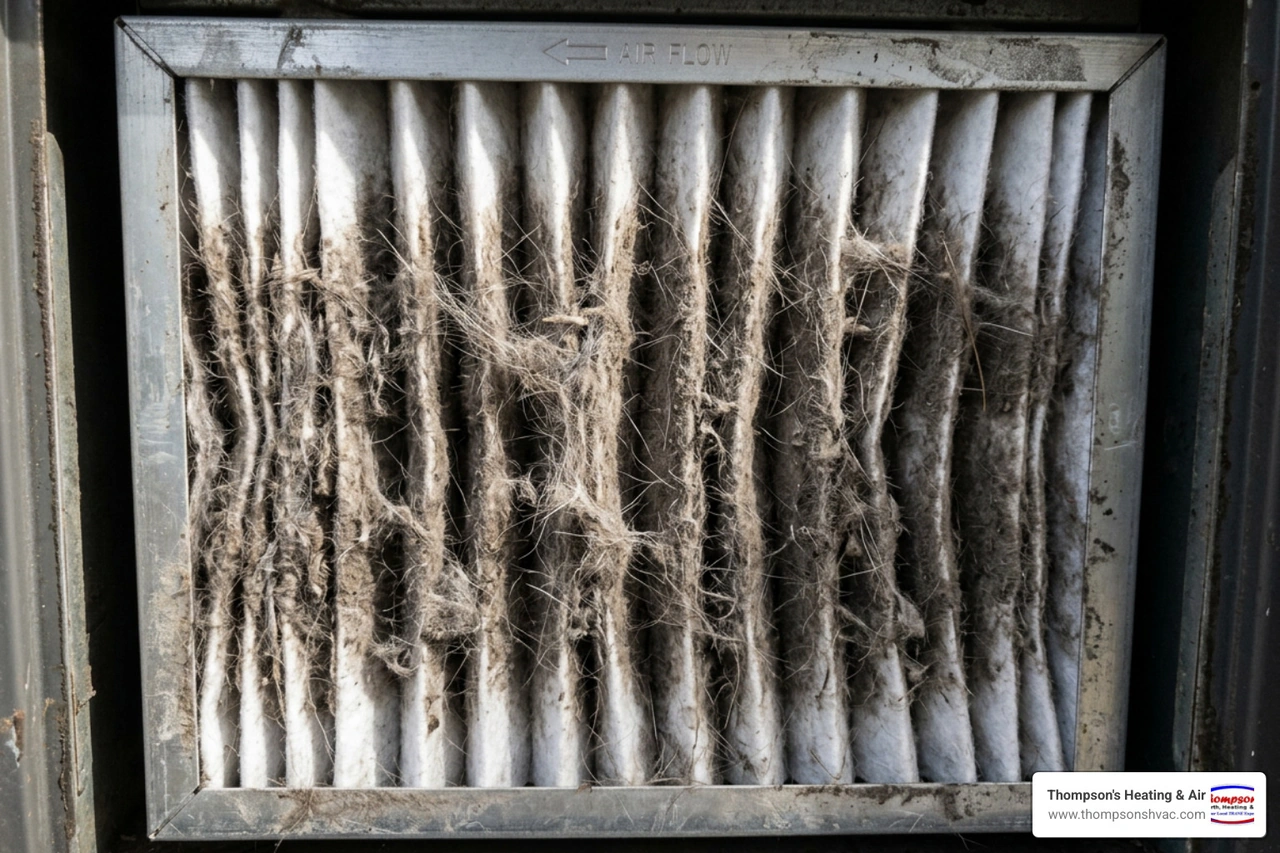
To truly understand how our furry friends impact our heating and cooling systems, we have to look at what happens when air circulates through our homes. Your HVAC system acts like the lungs of your house. It pulls air from your living spaces through return vents, conditions it (heats or cools it), and pushes it back out. The air filter is the only barrier protecting your sensitive HVAC equipment from the airborne debris floating around your rooms.
When you have pets, that airborne debris increases exponentially. It is not just the visible pet hair that you find on your couch or carpets; it is also pet dander, saliva proteins, and outdoor dirt that your pets track inside.
As these particles are pulled toward the return vents, they hit the filter. While larger pet hairs get caught on the surface of the filter, microscopic pet dander (which ranges from 2.5 to 10 microns in size) embeds itself deep within the filter’s fibers. Over time, this mixture of hair and dander creates a dense, mat-like barrier.
This barrier leads to severe airflow restriction. When air cannot easily pass through the filter, your blower motor has to work twice as hard to circulate air. Trying to run your HVAC system with a heavily clogged filter is like trying to drink a thick milkshake through a soggy paper straw. It strains the system, reduces comfort, and forces you to ask: How Often Should You Change Your HVAC Air Filter to prevent permanent damage? In a pet-friendly home, the answer is almost always "much more often than you think."
Understanding how pets affect how often you change your filter by size and breed
Not all pets are created equal when it comes to their impact on your indoor air. A tiny, short-haired Chihuahua is going to have a very different impact on your HVAC filter than a pair of fluffy Siberian Huskies.
Heavy shedders are the most obvious culprits. Breeds like Golden Retrievers, German Shepherds, and Labradors shed year-round, leaving a constant trail of hair that quickly blankets the surface of your air filter. Furthermore, many breeds experience a bi-annual "coat blow" in the spring and fall. During these periods, the volume of loose hair in your home can easily triple over a three-to-four-week span, completely loading a standard filter in a matter of days.
However, dander particles are the real silent threat. Cats, for example, may produce less visible hair than large dogs, but cat dander is exceptionally fine, sticky, and lightweight. It stays airborne much longer than dog dander, meaning it bypasses floor-level dust traps and heads straight into your return air vents. Birds are another unexpected source of filter strain; species like cockatiels and African Greys produce a fine powder or feather dust that can coat a filter in a thin, chalky layer very quickly.
How pets affect how often you change your filter during Woodland's peak seasons
Here in Yolo County, our local climate plays a massive role in how quickly pet debris accumulates in our heating and cooling systems. Woodland, Davis, and Dixon experience distinct seasonal shifts that directly change how we manage our indoor air.
During our blazing hot summers, your air conditioning system runs almost continuously to keep your home comfortable. This constant circulation means your HVAC system is pulling pet hair and dander through the filter at an accelerated rate. If your AC is running 10 to 12 hours a day, a filter that might last two months in mild weather can easily clog in 30 days.
In the winter, we face a different challenge. While the system may run less continuously than in the summer peak, we tend to keep our doors and windows tightly shut to keep the cold air out. This sealed-house environment traps pet dander, hair, and dust inside, creating a concentrated loop of indoor pollutants. Because your pets also spend more time indoors during the winter, dander levels spike, requiring monthly filter checks to keep your furnace running safely. Understanding these regional patterns is a key part of realizing the Benefits of Regular HVAC Maintenance in Hot Dry Valley climates.
Recommended Filter Replacement Schedules for Pet Owners
To help you keep track of your HVAC maintenance, we have broken down the ideal replacement frequencies based on the thickness of your filter and the number of pets in your home.
• 1-Inch Filter — 1 Pet (Low Shedding): Every 45–60 days — 1 Large Pet or 2 Pets: Every 30–45 days — 3+ Pets / Heavy Shedders: Every 20–30 days — Allergy or Asthma Sufferers: Every 15–20 days
• 4-Inch Media Filter — 1 Pet (Low Shedding): Every 6–9 months — 1 Large Pet or 2 Pets: Every 4–6 months — 3+ Pets / Heavy Shedders: Every 2–3 months — Allergy or Asthma Sufferers: Every 2 months
If you are using standard 1-inch filters, they have a very limited surface area. They fill up quickly because there simply is not much physical space to store captured dust and pet hair.
Upgrading to a 4-inch media filter is one of the best moves a pet owner can make. These thicker filters feature deep pleats, providing up to ten times the surface area of a standard 1-inch filter. While they still clog faster in pet homes than in pet-free homes, they offer much more breathing room and do not need to be changed nearly as often.
For households with allergy or asthma sufferers, the schedule must be kept tight. Pet dander carries proteins that trigger immune responses, causing sneezing, itchy eyes, and respiratory irritation. Keeping a fresh filter in place ensures these microscopic particles are pulled out of circulation quickly, which is why we highly recommend exploring advanced Air Filtration options for sensitive households.
Choosing the Best Air Filter for Homes with Pets
When you walk down the home improvement aisle, the sheer variety of air filters can be overwhelming. For pet owners, choosing the right filter is a balancing act between capturing tiny dander particles and keeping air flowing freely through the system.
Air filters are rated using the MERV (Minimum Efficiency Reporting Value) scale, which ranges from 1 to 16 for residential systems:
• MERV 1 to 4 (Fiberglass Filters): These are the cheap, flat, green or blue filters. They are designed to capture only the largest particles — like giant dust bunnies or large clumps of pet hair — to protect the blower motor. They do absolutely nothing to capture pet dander or improve your Indoor Air Quality. We recommend avoiding these entirely if you have pets.
• MERV 8 (Standard Pleated Filters): This is the baseline recommendation for homes with a single, low-shedding pet. They do a decent job of catching larger pet hair and some dander without restricting airflow.
• MERV 11 (High-Efficiency Pleated Filters): This is the "sweet spot" for most pet owners. A MERV 11 filter captures up to 85% of airborne particles, including fine pet dander, mold spores, and pollen. It provides excellent filtration while keeping resistance low enough for modern HVAC systems to handle comfortably.
• MERV 13 (Premium Pleated Filters): Excellent for multi-pet homes or households with severe allergies. They capture up to 95% of airborne dander and microscopic particles. However, because the weave is so tight, they can restrict airflow if they are left in the system even slightly too long.
• HEPA Filters: While true HEPA filters are incredible at removing 99.97% of particles, standard residential HVAC systems are not powerful enough to push air through them. Installing a standard HEPA filter in a regular return vent can restrict airflow so severely that it can freeze your AC coils or burn out your blower motor. If you want HEPA-level filtration, it is best to use standalone HEPA purifiers or have a professional install a dedicated whole-home bypass system.
Warning Signs Your Air Filter Needs Immediate Replacement
While calendar reminders are incredibly helpful, your home will often drop hints when your air filter has reached its capacity. Learning to spot these warning signs can save you from a sudden system breakdown during a Woodland summer heatwave.
Here is what you should look out for:
• Dust Settling Quickly: If you find yourself dusting your coffee table and shelves only to see a thin layer of gray dust return 24 hours later, your air filter is likely full. Once a filter is clogged, it can no longer trap new particles, allowing them to bypass the filter or blow right back out of your supply registers.
• Weak Airflow from Vents: Walk around your home and place your hand over the supply vents while the system is running. If the airflow feels weak, warm, or sluggish, a blocked filter is the most common culprit.
• Rising Energy Bills: When a filter is clogged, your system has to run longer cycles to reach the temperature set on your thermostat. According to the Department of Energy, a dirty filter can raise your HVAC energy consumption by up to 15%. If you notice your utility bills climbing without a change in weather, check the filter.
• Musty or "Pet-Heavy" Odors: A clean filter helps trap odors. When a filter becomes packed with pet hair, dander, and oils, the air passing through it picks up those trapped smells and distributes them throughout your entire house.
• The Light Test: If you are unsure whether your filter needs to be changed, pull it out and hold it up to a bright light source (like a lightbulb or the sun). If you cannot see light passing through the pleats, the filter is fully loaded and needs to be replaced immediately.
Additional Steps to Improve Indoor Air Quality and Protect Your HVAC
While changing your filter regularly is the single most important step you can take, you can make its job a lot easier by reducing the volume of pet hair and dander that enters your ductwork in the first place. Taking a proactive approach to source control will extend your filter’s life and protect your system.
First and foremost, focus on regular pet grooming. Brushing your dogs and cats two to three times a week captures loose hair and dander before it ever gets a chance to float into your return vents. Whenever possible, groom your pets outdoors or on an easy-to-clean porch to keep the mess outside. Bathing your pets every two to four weeks with a moisturizing shampoo also helps control dander buildup. Homes with consistent grooming habits can get 30% to 50% longer filter life compared to similar homes that rarely groom.
Next, establish a thorough cleaning routine. Vacuuming your carpets, rugs, and pet bedding at least twice a week with a HEPA-equipped vacuum prevents pet hair from being kicked back into the air every time someone walks across the room. It is also a great idea to wipe down your supply and return vent grilles with a damp cloth monthly to prevent fur from clinging to the metal slats.
Finally, do not underestimate the power of professional maintenance. Over the years, pet hair and dander inevitably slip past even the best filters and settle inside your ductwork and HVAC cabinet. Scheduling professional duct cleaning every few years and keeping up with a standard maintenance routine ensures your system remains clean from the inside out. For a complete look at how to protect your system year-round, check out our How to Improve Indoor Air Quality at Home guide and our Annual HVAC Maintenance Complete Guide.
Frequently Asked Questions about Pet Dander and HVAC Filters
Managing indoor pollutants and maintaining system efficiency can raise a lot of questions for pet owners. Here are some of the most common questions we hear from local homeowners.
Can I vacuum a disposable air filter to make it last longer?
No, you should never vacuum a disposable air filter. While it might look like you are cleaning it by removing the surface layer of pet hair, vacuuming does not restore the filter’s performance.
Disposable filters are made of tightly woven synthetic or paper fibers that are statically charged to trap microscopic particles. Vacuuming can easily tear these delicate fibers, creating invisible gaps that allow dust and dander to pass straight into your HVAC system. Additionally, the suction from a vacuum can release concentrated allergens back into your indoor air, causing immediate allergy flare-ups. Always replace disposable filters with fresh ones.
Do air purifiers reduce how often I need to change my HVAC filter?
Yes, portable air purifiers can help reduce the overall load on your HVAC system, but they are not a replacement for regular filter changes.
Portable HEPA purifiers are excellent at cleaning the air in specific rooms, such as a bedroom or a living room where your pets spend most of their time. By capturing dander and hair locally, they prevent some of those particles from traveling to your central return vents. However, your central HVAC system still moves thousands of cubic feet of air every hour across your entire home. While purifiers might buy you an extra week or two of filter life, you still need to inspect and replace your HVAC filter on a regular schedule.
What happens to my system if I never change the filter with pets?
Neglecting your air filter in a home with pets can lead to catastrophic and expensive HVAC failures.
As the filter becomes completely choked with hair and dander, the lack of airflow causes the temperature inside your system to fluctuate wildly. In the summer, restricted airflow prevents heat from being absorbed, causing your indoor evaporator coils to freeze over into a solid block of ice. In the winter, the lack of airflow causes your furnace to overheat, triggering safety switches or cracking your heat exchanger — a dangerous issue that can release carbon monoxide. Over time, the constant strain will burn out your blower motor, leaving you with a major repair bill. To understand what goes into preventing these issues, take a look at What Does an HVAC Maintenance Visit Include.
Conclusion
Sharing your home with dogs, cats, or birds brings immense joy, but it also means taking extra care of the system that keeps your indoor air clean and comfortable. By understanding how your pets affect your air filter and adjusting your replacement schedule accordingly, you can protect your wallet from high energy bills, prevent costly system breakdowns, and ensure everyone in your household breathes easily.
If you need help selecting the perfect filter for your pet-heavy home, want to upgrade to a high-efficiency media filter, or are ready to schedule your next seasonal tune-up, our team at Thompson's Heating & Air is here to help. Serving Woodland, Davis, Dixon, and surrounding Yolo County communities since 1992, we bring the local expertise and reliable service your family deserves.
Explore our advanced indoor air quality products today, or reach out to us to schedule your next service!



.avif)
.avif)
.png)
