
The Ultimate Guide to Whole-Home Humidifier Options

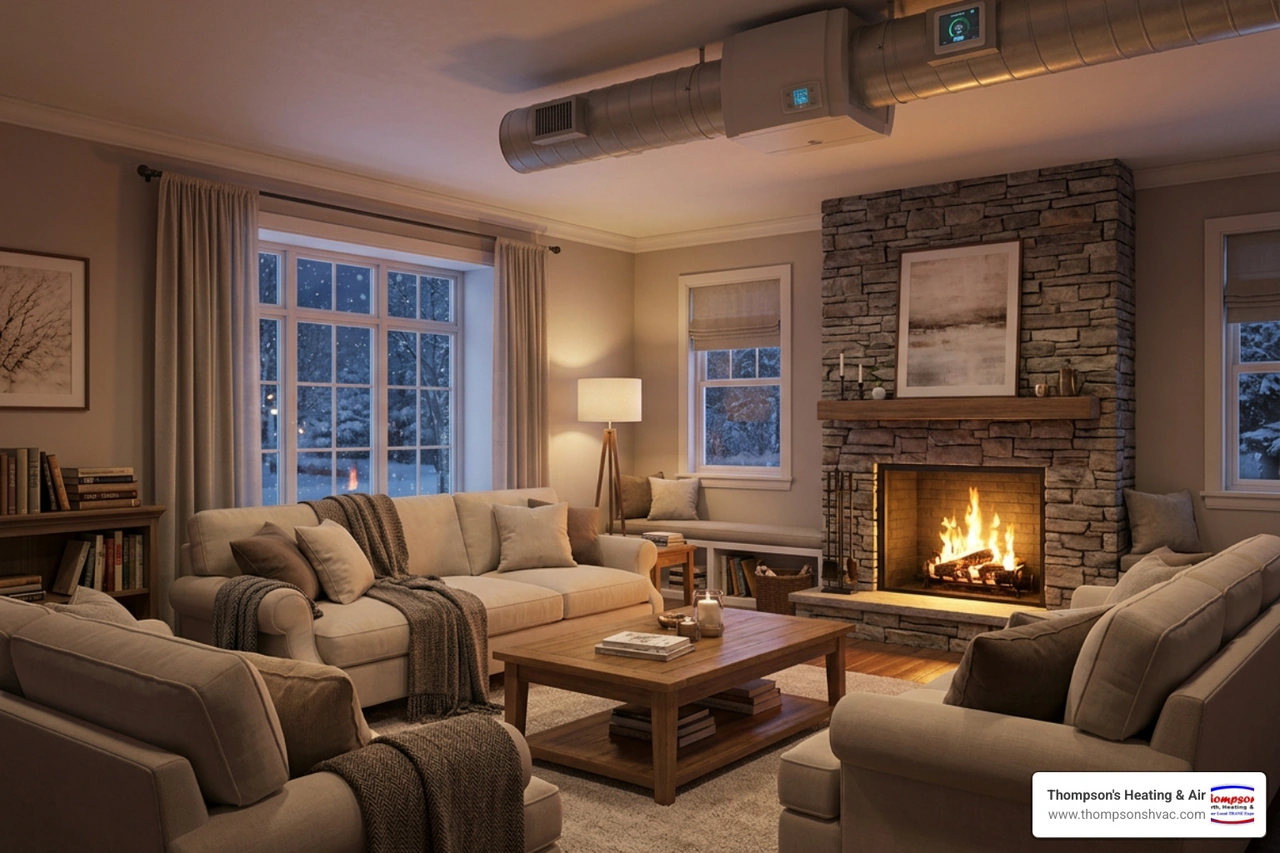
Why Humidifier Options for Whole Home Comfort Matter More Than You Think
When the winter heating season hits Woodland, CA, humidifier options for whole home comfort become one of the most important — and most overlooked — decisions a homeowner can make. Dry indoor air doesn't just feel uncomfortable. It can cause static electricity shocks, dry skin, irritated sinuses, and even cracked wood floors or furniture. And in a climate where heating systems run hard through the cooler months, indoor humidity levels can drop well below the EPA's recommended range of 30–50%.
The good news? Whole-house humidifiers connect directly to your HVAC system and water supply, automatically maintaining healthy moisture levels throughout every room — no manual refilling, no portable units to move around.
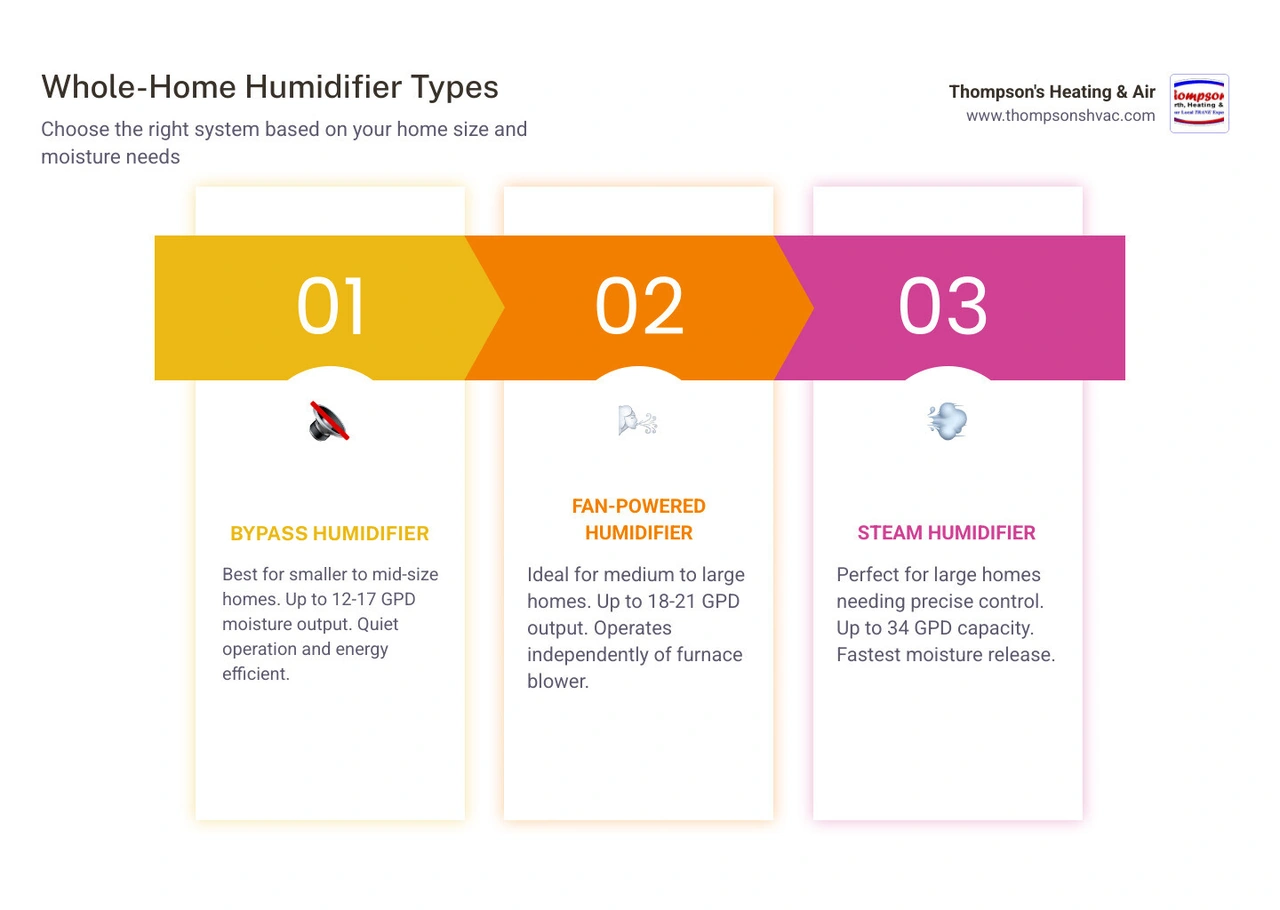
Here's a quick look at your main options:
• Bypass — Best For: Smaller to mid-size homes — Moisture Output: Up to 12–17 GPD — Key Trait: Quiet, energy-efficient
• Fan-Powered — Best For: Medium to large homes — Moisture Output: Up to 18–21 GPD — Key Trait: Works independently of furnace
• Steam — Best For: Large homes, precise control — Moisture Output: Up to 34 GPD — Key Trait: Fastest, highest capacity
In the sections below, we'll break down each type, help you figure out the right size for your home, and explain what maintenance looks like over the long run.
Understanding Your Humidifier Options for Whole Home Comfort

When we talk about whole-house humidifiers, we are talking about systems that integrate seamlessly with your existing heating and cooling setup. Unlike portable humidifiers that only treat a single room, require daily refills, and take up valuable floor space, a whole-house system is a "set-it-and-forget-it" solution. It connects directly to your home’s water line and works alongside your furnace or heat pump to distribute moisture evenly through your supply ducts.
Maintaining balanced Indoor Air Quality is about more than just temperature. When your indoor air is too dry, it acts like a giant sponge, pulling moisture out of everything it touches—including your skin, your nasal passages, and even your wooden furniture and floors. By adding a whole-home humidification system, you can keep your home’s relative humidity (RH) at the sweet spot recommended by the EPA (30% to 50%).
There are two primary methods of humidification used in whole-home systems: evaporative and steam. Within the evaporative category, you will find bypass and fan-powered models. Let’s take a closer look at how each of these options works.
Bypass Humidifiers
Bypass humidifiers are highly popular due to their simplicity, reliability, and excellent energy efficiency. These systems are installed on either the supply or return plenum of your HVAC system, with a dedicated "bypass" duct running to the opposite side.
Here is how they work:
• When your furnace turns on and starts blowing warm air, a portion of that air is redirected through the bypass duct.
• The redirected air passes through a moisture-laden water panel (often called a humidifier pad).
• As the warm air passes through the pad, the water evaporates into the air stream.
• This newly humidified air is then distributed throughout your entire home via your existing ductwork.
Because bypass systems rely entirely on your furnace's blower motor to push air through the water panel, they have very few moving parts. This makes them incredibly quiet and highly durable. If you are looking to enjoy the Whole House Humidifier Benefits for Dry Climates without adding to your monthly electricity usage, a bypass model is an outstanding, cost-effective choice.
Fan-Powered Humidifiers
Fan-powered humidifiers operate on a similar evaporative principle as bypass systems, but with one major difference: they contain their own internal fan.
Instead of relying on the pressure difference between your supply and return ducts to move air through the water panel, a fan-powered unit pulls air directly from your ductwork, blows it across the wet pad, and pushes it back into the warm air stream.
This independent fan operation offers several key advantages:
• Greater Efficiency and Output: Fan-powered systems can deliver up to 18 to 21 gallons of moisture per day, making them ideal for medium to large homes.
• Space-Saving Installation: Because they do not require a bypass duct, they have a smaller footprint and can be installed in tight closets or crawlspaces where a bypass pipe won't fit.
• More Control: They can run even when your furnace isn't actively heating, as long as the system fan is running, allowing for more consistent moisture levels.
Steam Humidifiers
If you want the gold standard of moisture control, steam humidifiers are the ultimate option. While evaporative systems rely on the temperature of your furnace air to evaporate water, steam humidifiers use electrode technology to boil water independently.
Once the water reaches a boil inside the canister, the system injects pure, hygienic steam directly into your supply ducts to be distributed throughout the house.
Steam systems are the preferred choice for:
• Maximum Capacity: Delivering up to 34 gallons of moisture per day, they can easily cover very large homes or properties with loose insulation.
• Rapid Moisture Release: They can raise your home's humidity levels in a matter of hours.
• Total Independence: Since they create their own heat to boil water, they can run completely independently of your heating system's cycles.
Comparing Steam vs. Evaporative Humidifier Options
Choosing between steam and evaporative (bypass and fan-powered) systems comes down to your home's unique layout, your humidity needs, and your overall goals for comfort and resource conservation.
• Humidification Method — Bypass Humidifiers: Evaporative (uses furnace heat) — Fan-Powered Humidifiers: Evaporative (uses furnace heat + internal fan) — Steam Humidifiers: Steam (boils water internally)
• Daily Output (GPD) — Bypass Humidifiers: 12 to 17 gallons — Fan-Powered Humidifiers: 18 to 21 gallons — Steam Humidifiers: Up to 34 gallons
• Electricity Usage — Bypass Humidifiers: Extremely low (uses HVAC blower) — Fan-Powered Humidifiers: Low (uses small internal fan) — Steam Humidifiers: Moderate to high (heats water to boil)
• Water Efficiency — Bypass Humidifiers: Standard flow-through — Fan-Powered Humidifiers: Standard (some models feature water-saving recirculation) — Steam Humidifiers: High (nearly all water is converted to steam)
• HVAC Dependency — Bypass Humidifiers: Requires furnace to be running heat — Fan-Powered Humidifiers: Requires system fan to be running — Steam Humidifiers: Can run independently of heating cycles
While steam humidifiers offer unmatched performance and precise control, they do require more electrical power to operate because they must boil water. On the other hand, evaporative options are incredibly energy-efficient but rely on warm air from your furnace to work effectively.
If you are looking for practical ways to balance your humidity alongside other comfort upgrades, check out our guide on How to Improve Indoor Air Quality at Home.
How to Choose and Size the Right System for Your Home
Selecting the right humidifier is not a one-size-fits-all process. If you install a system that is too small, it will run constantly without ever reaching your target humidity. If you install one that is too large, you risk creating excess moisture, which can lead to window condensation, mold growth, and structural issues.
When we evaluate homes in Woodland, Davis, and the surrounding Sacramento Valley, we look at several critical factors to determine your daily moisture needs in Gallons Per Day (GPD). For a deeper look at regional air challenges, read our article on Air Quality Solutions for the Sacramento Valley Homes.
Sizing Humidifier Options for Whole Home Comfort by Square Footage
The square footage of your home is the starting point for sizing, but your home’s insulation and airtightness play an equally massive role:
• Tight Homes (New Construction): Modern homes built with tight seals, energy-efficient windows, and dense insulation retain moisture very well. These homes require much lower GPD capacities—often a small bypass unit is more than enough.
• Loose Homes (Older/Historic Properties): Older homes in areas like Woodland or Winters often have more air leakage. As dry winter air leaks in, it constantly dilutes your indoor humidity. These homes require much higher GPD capacities, making a large fan-powered or steam humidifier the best choice.
Integrating Humidifier Options for Whole Home Comfort with Smart Thermostats
Modern whole-home humidifiers do not rely on manual dials or guesswork. They integrate directly with your existing HVAC controls or a smart thermostat.
By utilizing an outdoor temperature sensor, your smart thermostat can automatically adjust your indoor relative humidity target. This is crucial during cold winter nights. If the outdoor temperature drops significantly, the system will temporarily lower the indoor humidity target to prevent condensation from forming on your cold window panes.
To explore more ways to control your home's air, browse our Indoor Air Quality Products.
Maintenance and Longevity of Whole-House Systems
One of the greatest advantages of whole-house humidifiers over portable units is how little maintenance they require. Portable humidifiers must be cleaned every few days to prevent mold and bacteria from growing in stagnant water tanks. A whole-house system, however, only needs attention once or twice a season.
With proper care, a high-quality whole-house humidifier can easily last 10 to 15 years. Here is what seasonal maintenance generally involves:
1. Annual Water Panel Replacement: For evaporative (bypass and fan-powered) models, the water panel (or pad) must be replaced once per heating season. Over time, minerals from your tap water will build up on the pad, restricting airflow and reducing efficiency.
2. Steam Canister Replacement: Steam models use a replaceable canister that houses the electrodes. Depending on your water hardness, this canister should be replaced every 1 to 2 heating seasons.
3. Flushing the Drain Line: Flow-through and steam humidifiers use a drain line to flush away excess water and mineral deposits. Checking and flushing this line annually prevents clogs and water leaks.
4. Professional Inspections: Having your humidifier checked during your routine autumn furnace tune-up ensures that water valves, electrical connections, and humidistats are working perfectly before the dry cold sets in. Learn more about the Benefits of Regular HVAC Maintenance in Hot Dry Valley climates.
Frequently Asked Questions About Whole-Home Humidifiers
What is the ideal indoor humidity level for winter comfort?
The EPA recommends keeping indoor relative humidity between 30% and 50% for optimal health and comfort. During the winter, keeping your humidity between 35% and 45% is generally considered the sweet spot. This range keeps your skin and respiratory passages comfortable while preventing condensation on your windows. For more details on health benefits, read How Clean Air Improves Your Health and Comfort.
Do whole-house humidifiers require a dedicated drain line?
Yes, most whole-house humidifiers require a drain line. Evaporative flow-through systems constantly trickle water over a panel, and any water that doesn't evaporate is safely drained away. This continuous flushing prevents standing water, keeping the system clean and hygienic. Steam systems also require a drain line to perform automatic flush cycles, which remove mineral buildup from the boiling chamber.
Why is professional installation recommended over DIY?
Installing a whole-house humidifier requires working with your home's plumbing, electrical wiring, and ductwork. An improper DIY installation can lead to water leaks inside your furnace, mold growth in your ducts, electrical shorts, or voided equipment warranties. Professional installation ensures that your system is perfectly calibrated, safely wired, and backed by a reliable warranty.
Conclusion
Finding the right balance of humidity is essential for keeping your family healthy and your home protected during the dry winter months. Whether you opt for an efficient bypass system, a versatile fan-powered model, or a high-capacity steam system, investing in a whole-home humidifier is a choice you will feel every single day.
At Thompson's Heating & Air, we have been helping families across Woodland, Davis, Winters, and Yolo County stay comfortable since 1992. Our experienced, friendly technicians can assess your home's unique layout and help you choose the perfect system for your needs. Ready to upgrade your home's comfort? Explore our Indoor Air Quality Products and contact our team today!



.avif)
.avif)
.png)
