
Beginner's Guide to Why HVAC Replacement Is a Smart Investment

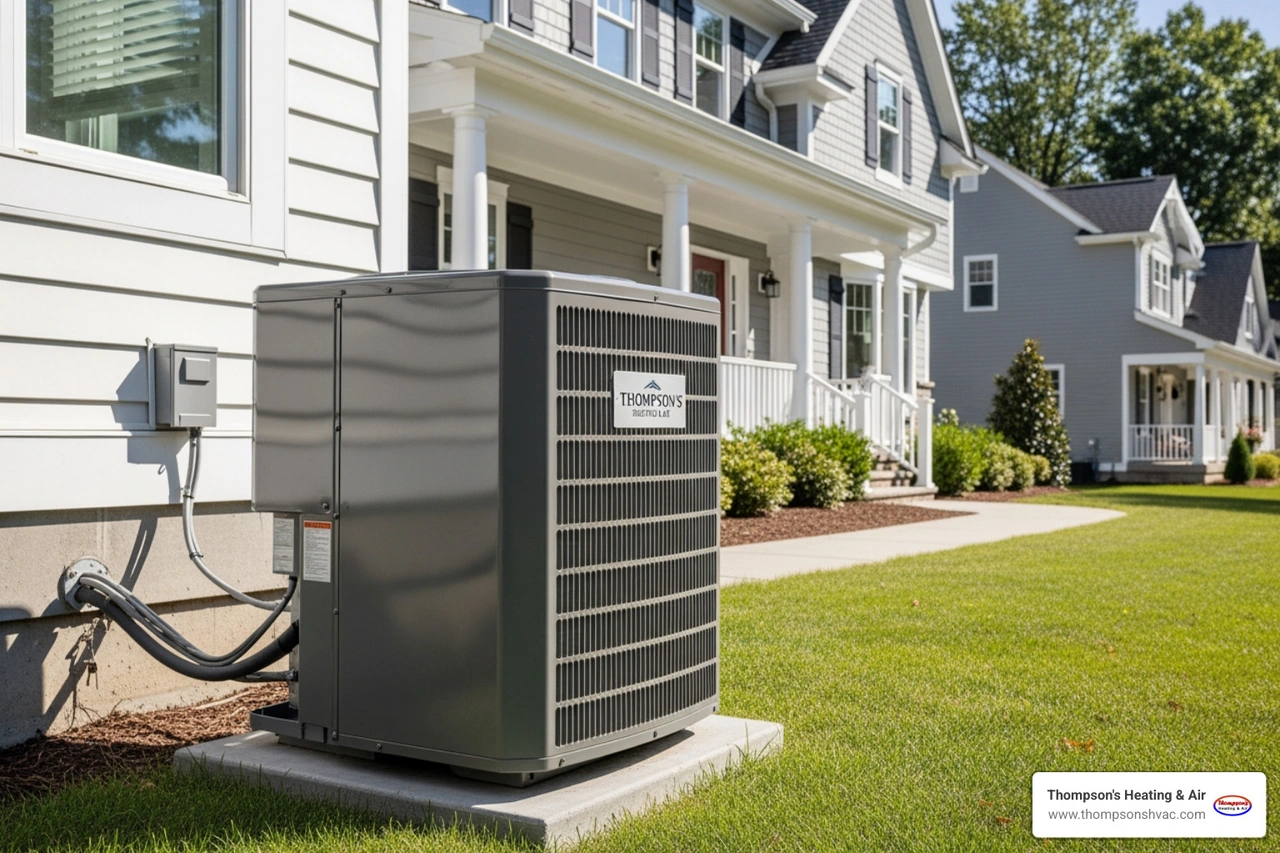
Why HVAC Replacement Is a Smart Investment for Woodland, CA Homeowners
Why HVAC replacement is a smart investment is one of the most practical questions a Woodland, CA homeowner can ask — whether you're planning to sell, trying to cut energy costs, or just tired of calling for repairs every summer. The Sacramento Valley's intense heat puts enormous strain on aging systems, and an outdated unit doesn't just hurt your comfort — it can hurt your home's value and your wallet at the same time.
Here's a quick look at why replacing your HVAC system pays off:
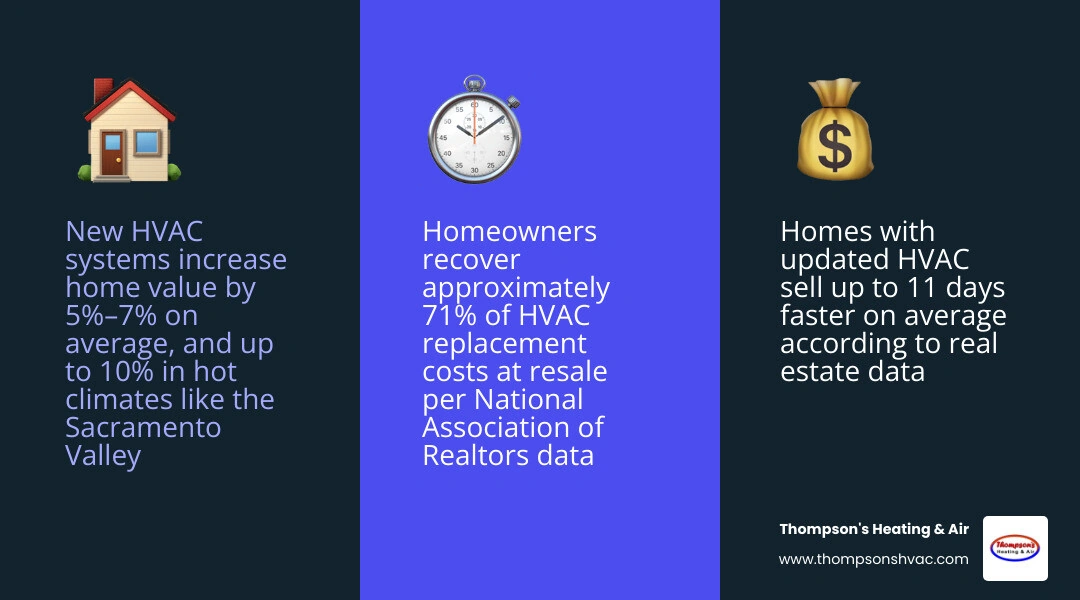
• Home value boost: A new system adds an average of 5%–7% to your home's value, and up to 10% in hot climates like Woodland
• Faster sale: Homes with updated HVAC systems sell up to 11 days faster on average
• Energy savings: Modern systems use 20%–40% less energy than units from just a decade ago
• Cost recovery: Homeowners recover approximately 71% of HVAC replacement costs at resale, according to National Association of Realtors data
• Appraisal bump: Replacing an aging system before listing can add $5,000–$10,000 in appraised value
• Buyer confidence: A new system removes one of the biggest concerns buyers bring to the negotiating table
• Tax credits: High-efficiency systems may qualify for up to 30% in federal tax credits under the Inflation Reduction Act through 2032
Whether you're a homeowner looking for long-term savings or preparing to list your property, the numbers make a strong case. In a region where summer temperatures routinely push past 100°F, a reliable, efficient HVAC system isn't a luxury — it's a necessity that buyers and appraisers both take seriously.
Why HVAC Replacement Is a Smart Investment for Home Equity
When we talk about home equity, we often think about kitchen remodels or fresh landscaping. However, in May 2026, savvy homeowners in Woodland and Davis are realizing that the "guts" of the home matter just as much as the granite countertops. Replacing an aging HVAC system is one of the most effective ways to build equity because it addresses "functional obsolescence"—a fancy term appraisers use for things that are old, inefficient, or just plain don't work like they used to.
On average, a new HVAC installation can increase your home's value by 5% to 7%. If you are living in an area where the sun beats down relentlessly, that boost can even climb to 10%. This isn't just a random number; it's a reflection of how much a buyer is willing to pay to avoid the immediate headache of a $10,000+ repair bill three months after moving in.
A new system also gives you massive negotiation leverage. During the inspection phase of a home sale, an old HVAC unit is often the first thing a buyer’s inspector will flag. This usually leads to the buyer asking for thousands of dollars in concessions. By replacing the system beforehand, you effectively "neuter" that negotiation tactic. You’re telling the buyer, "Everything is brand new and under warranty. There’s nothing to complain about here."
For a deeper dive into the numbers, we’ve put together a guide on How a New HVAC System Increases Home Value. It explains how appraisers view these upgrades and why "invisible" improvements can sometimes offer more protection for your investment than aesthetic ones.
Understanding the ROI: Why HVAC Replacement Is a Smart Investment for Sellers
If you’re worried about spending money only to lose it when you sell, the data should put your mind at ease. According to recent data from the National Association of Realtors, HVAC upgrades have a cost recovery rate of approximately 71%. While that might not be a 100% "profit," compare it to other remodels. Many aesthetic renovations only see a 50% to 60% return.
The real "Return on Investment" (ROI) comes from marketability. In a competitive market like West Sacramento or Natomas, a home with a brand-new, energy-efficient HVAC system stands out. It signals to buyers that you have maintained the property well. If the HVAC is new, they assume the roof, the plumbing, and the foundation have also been cared for. It builds a level of buyer confidence that is hard to quantify but easy to see when the offers start rolling in.
Maximizing Resale Value in the Sacramento Valley
Geography plays a huge role in why hvac replacement is a smart investment. If you lived in a coastal area where the temperature stays 72 degrees year-round, a new AC might not be a big deal. But here in the Sacramento Valley—from Woodland to Arbuckle—our summers are legendary.
In our climate, reliable cooling is a survival requirement, not a lifestyle choice. Homes with new, high-efficiency systems sell up to 11 days faster on average. Why? Because a buyer in Winters or Dixon doesn't want to spend their first weekend in a new home sweating through a heatwave while waiting for an emergency repairman. They want a "turnkey" property where they can set the thermostat to 74 and forget about it.
One critical factor we always emphasize is getting the size right. An oversized system will "short-cycle," turning on and off constantly, which wears out the motor and leaves the air feeling clammy. An undersized system will run forever and never actually cool the house. We recommend checking out our resource on Getting the Right Size HVAC for the Sacramento Valley Homes to ensure you aren't over-investing in a system that doesn't fit your floor plan.
When a system is sized perfectly, it doesn't just work better—it feels better. This is a subtle but powerful selling point. When a prospective buyer walks into your open house and feels perfectly even, crisp air, they are more likely to make an offer. You can learn more about this in our guide on How Proper HVAC Sizing Affects Comfort.
Energy Efficiency Standards and Long-Term Savings
As of 2026, energy standards have become much more stringent. If your current system was manufactured before 2015, it likely uses an older SEER (Seasonal Energy Efficiency Ratio) rating. Today’s SEER2 standards are significantly higher, meaning modern units are designed to squeeze much more cooling out of every watt of electricity.
Upgrading to a new, high-efficiency system can reduce your energy consumption by 20% to 40% compared to units from just a decade ago. In California, where utility rates aren't exactly "cheap," those savings add up fast. Many homeowners in our area are switching to heat pumps, which provide both heating and cooling with incredible efficiency. You can read about the Heat Pump Benefits for Sacramento Valley Homeowners to see if this technology is right for your specific town.
To make the investment even smarter, there are several financial "boosts" available in 2026:
1. Federal Tax Credits: Under the Inflation Reduction Act, you can claim a tax credit of up to 30% (capped at $2,000 annually for heat pumps) for high-efficiency upgrades.
2. Local Rebates: Programs like those offered by PG&E provide incentives for installing ENERGY STAR-certified equipment.
3. Eco-Friendly Refrigerants: New systems use refrigerants like R-454B, which have a much lower global warming potential than the phased-out R-22 or even R-410A.
For more details on how to snag these savings, check out California Energy Rebates for HVAC and Fireplace Upgrades and our breakdown of the Inflation Reduction Act Benefits for California Homeowners.
Lowering Monthly Expenses: Why HVAC Replacement Is a Smart Investment for Buyers
Imagine you are a buyer looking at two identical houses in Davis. One has a 15-year-old AC unit that sounds like a jet engine taking off. The other has a brand-new, ENERGY STAR-certified system that is whisper-quiet. Even if the houses are the same price, the second house is actually "cheaper" because the monthly utility bills will be significantly lower.
Modern systems achieve this through variable-speed technology. Instead of being "all on" or "all off," these motors can adjust their speed to match the exact cooling needs of the home. This prevents the energy-hungry "spike" that happens every time an old compressor kicks in.
• 15+ Years Old — Efficiency Rating (Typical): 8 - 10 SEER — Energy Savings Potential: Baseline
• 10 Years Old — Efficiency Rating (Typical): 13 - 14 SEER — Energy Savings Potential: 15% - 20% Savings
• 2026 Standard — Efficiency Rating (Typical): 14.3 SEER2 (Minimum) — Energy Savings Potential: 25% - 30% Savings
• 2026 High-Efficiency — Efficiency Rating (Typical): 20+ SEER2 — Energy Savings Potential: 40% - 50% Savings
Strategic Timing: When to Choose Replacement Over Repair
We get asked all the time: "Can't I just fix it one more time?" Sometimes, the answer is yes. But often, you're just throwing good money after bad. We generally use a few "rules of thumb" to help our neighbors in Woodland and Winters decide.
The 15-Year Benchmark: Most residential systems are designed to last 12 to 15 years. Once you hit that 15-year mark, the system enters a stage of "systemic decline." This is where one part fails, you fix it, and then the stress of the new part causes an old part to fail. It’s a domino effect that can get expensive very quickly.
The $5,000 Rule: Multiply the age of your unit by the cost of the repair. If the total is more than $5,000, it’s usually smarter to replace it. For example, if a 12-year-old unit needs a $600 repair (12 x 600 = 7,200), replacement is the better move.
The 50% Rule: If a single repair cost exceeds 50% of the value of a brand-new system, stop repairing and start replacing.
If you’re on the fence, our HVAC Repair vs Replace Guide 2026 and the article Should I Repair or Replace My HVAC System offer more detailed frameworks. And if you're just starting to notice issues, keep an eye out for these Signs Your AC Needs Repair before the system fails completely during a July afternoon.
Modern Features That Drive Buyer Interest in 2026
In 2026, a "smart home" isn't just about voice-controlled lightbulbs. It’s about a home that manages its own climate efficiently. When you replace your HVAC, you aren't just getting a new metal box outside; you’re upgrading your home’s "IQ."
Smart Thermostats: These can bump a home’s resale value by up to 5%. They allow buyers to control the temperature from their phones, but more importantly, they use AI to learn the family's schedule and save energy automatically.
Zoned Cooling: This is a huge hit in larger homes in areas like Davis or Woodland. Zoning allows you to cool the living room during the day and the bedrooms at night without wasting energy on empty rooms. It solves the "hot upstairs" problem that plagues so many two-story homes in the Sacramento Valley.
Indoor Air Quality (IAQ): Modern systems can be equipped with HEPA filtration, UV lights to kill bacteria, and whole-home humidifiers or dehumidifiers. With the occasional smoke from regional wildfires, high-quality air filtration has become a major selling point for health-conscious buyers.
Variable-Speed Technology: As mentioned before, this makes the system whisper-quiet. No more turning up the TV volume because the AC kicked on. That's a "luxury" feel that buyers notice immediately.
To ensure these features work as intended, we always perform a detailed load calculation. You can learn why this is so important in our post on How HVAC Load Calculations Work.
Frequently Asked Questions about HVAC Investments
Does a new HVAC system increase the appraised value of a home?
Yes, absolutely. Appraisers use a standard form where they compare your home to "comps" (comparable homes sold recently). If those other homes had 20-year-old systems and yours is brand new, the appraiser will make a positive "condition adjustment." This can range from $5,000 to $10,000 depending on the size of the system and the local market. It reduces the "effective age" of your home in the eyes of the bank.
Are there tax credits available for new installations in 2026?
Yes, and they are better than ever. The Inflation Reduction Act provides federal tax credits for up to 30% of the cost of high-efficiency heat pumps and air conditioners. In California, you can also look for utility-specific rebates. We’ve simplified the process of finding these in our guide on How to Apply for Energy Rebates in California.
How much faster do homes with new HVAC systems sell?
On average, homes with updated HVAC systems sell about 11 days faster. In a "buyer's market," this can be the difference between selling in a month or sitting on the market for ninety days. It removes the "fear factor" for buyers. When a buyer sees a new HVAC, they see a home that has been loved and maintained, which leads to faster, stronger offers and fewer closing delays.
Conclusion
At the end of the day, why hvac replacement is a smart investment comes down to three things: peace of mind, pocketbook protection, and property value. Whether you’re trying to survive a 105-degree day in Woodland or trying to get the best possible price for your home in Davis, a modern HVAC system is the foundation of a comfortable, valuable house.
At Thompson's Heating & Air, we’ve been helping our neighbors across Yolo County since 1992. We’re a family-owned business, and we treat every installation like it’s going into our own mother’s house. We know the local climate, we know the local homes, and we know exactly how to help you get the most out of your investment.
Don’t wait for your old system to give up the ghost in the middle of a heatwave. Schedule your professional HVAC installation or maintenance today and let us help you unlock the full potential of your home’s comfort and value. Whether you are in Woodland, Winters, Davis, or anywhere else in the Sacramento Valley, we’re here to make sure your investment is a cool one.



.avif)
.avif)
.png)
