
How Hot Dry Valley Affects Filter Replacement Frequency

Why Hot Dry Valley Climates Force You to Replace Your Air Filter Far More Often
Understanding how hot dry valley affects filter replacement frequency is something every Woodland, CA homeowner needs to get right — because the standard advice on filter changes was never written with your climate in mind.
Most filter packaging says replace every 60 to 90 days. That timeline assumes a mild climate, moderate air quality, and a system that gets regular breaks. In the Sacramento Valley, none of those assumptions hold.
Here's the short answer:
How Hot Dry Valley Affects Filter Replacement Frequency — Quick Reference
• Typical filter lifespan — Standard Climate: 60-90 days — Hot Dry Valley (Woodland, CA): 30 days or less
• During harvest season — Standard Climate: 60-90 days — Hot Dry Valley (Woodland, CA): Every 2 weeks near ag zones
• During wildfire smoke events — Standard Climate: 60-90 days — Hot Dry Valley (Woodland, CA): Replace immediately after event
• Annual HVAC runtime — Standard Climate: ~1,000 hours — Hot Dry Valley (Woodland, CA): 2,000-3,000 hours
• Cooling season length — Standard Climate: 4-6 months — Hot Dry Valley (Woodland, CA): 10-11 months
Valley summers regularly push past 100°F. Your HVAC system runs nearly year-round just to keep up. At the same time, agricultural dust, fine silica particles, and wildfire smoke are constantly moving through your air — and straight into your filter. A system running that hard, in air that dirty, loads filters weeks faster than any manufacturer's label accounts for.
The result? Reduced airflow, stressed equipment, higher energy bills, and — on the hottest days — a system that simply can't keep up.
This guide breaks down exactly why valley conditions are so tough on filters, how to know when yours needs changing, and what you can do to protect your home comfort and your equipment.
The Science of Valley Air: Why Arid Climates Load Filters Faster
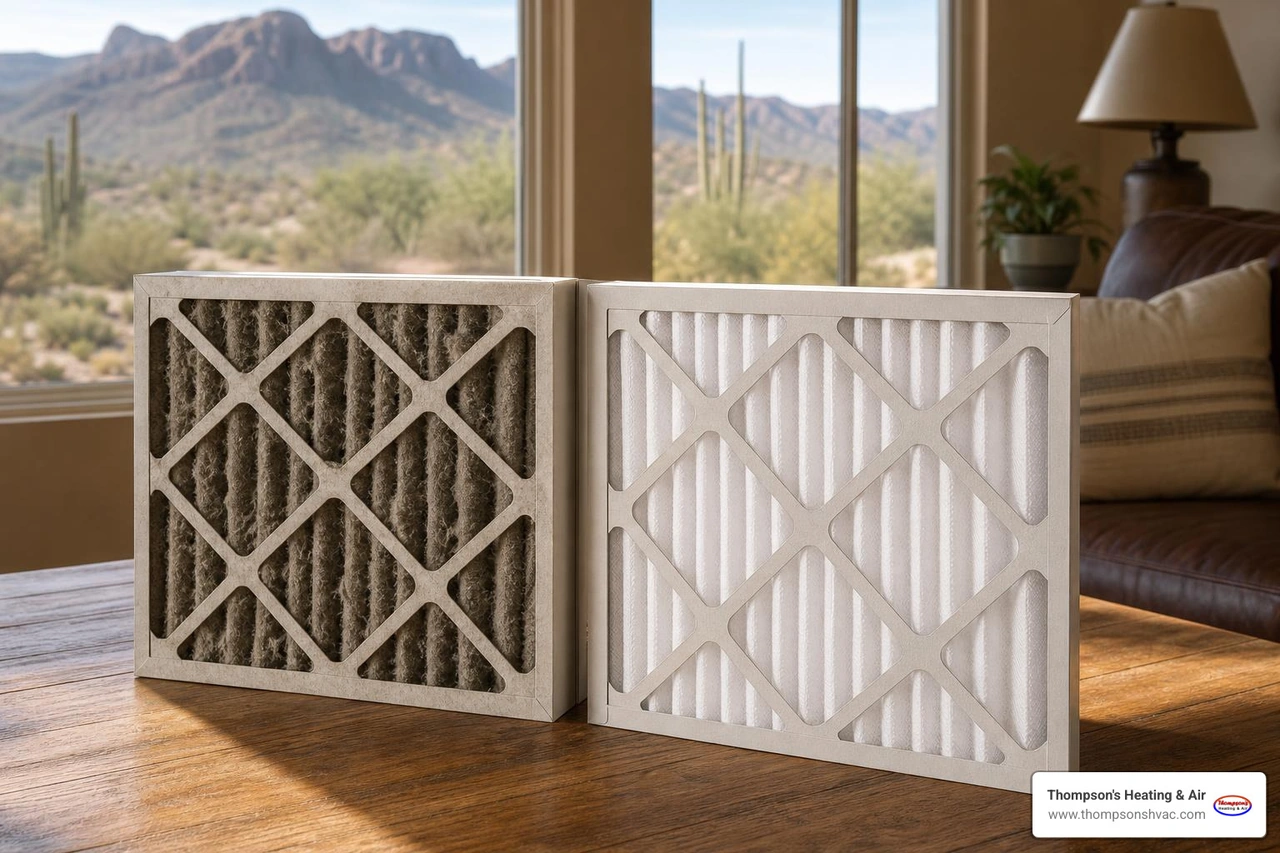
To understand why our filters clog so quickly, we have to look at the physics of dry, valley air. In humid regions, moisture in the air binds to dust particles, making them heavy so they settle to the ground. In an arid valley environment like ours, the air lacks this moisture. Suspended particulates remain airborne for much longer, floating freely until they are pulled directly into your home's return vents.
Furthermore, the soil composition in areas like Davis, Dixon, and Woodland is rich in fine silt and crystalline silica. When agricultural machinery tills the fields, or dry winds sweep across the valley floor, these microscopic minerals are kicked up into the atmosphere.
Unlike organic household dust, which is relatively soft and fluffy, valley soil particles are highly abrasive and carry a natural static charge in dry conditions. This static charge causes them to cling tenaciously to synthetic filter fibers, creating a dense, interlocking "mat" of dirt much faster than standard dust would.
Additionally, the geography of the Sacramento Valley acts like a giant bowl. During hot summer days, atmospheric stability traps these particles close to the ground, preventing them from dispersing. Your heating and cooling system essentially acts as a vacuum cleaner for your indoor space, continuously circulating this concentrated, dusty air.
To learn more about how our extreme local weather puts a unique strain on your home comfort systems, read our detailed guide on How Sacramento Valley Heat Affects Your HVAC and Fireplace.
How Hot Dry Valley Affects Filter Replacement Frequency
The primary driver behind accelerated filter clogging is sheer runtime. In milder, coastal climates, an air conditioner might only run for a few hours a day during the peak of summer. In a hot dry valley, your system undergoes intense operational stress.
• Extended Runtimes: During triple-digit heatwaves, it is common for air conditioners to run 12 to 15 hours a day.
• Annual Hours: While systems in moderate climates accumulate roughly 1,000 operating hours per year, a system in Yolo County regularly clocks between 2,000 and 3,000 hours annually.
• Stretched Seasons: Our cooling season often stretches from early spring through late autumn, meaning your system gets very little downtime.
Because of this constant operation, the volume of air passing through your filter is doubled or tripled compared to the national average. If a filter is rated to last 90 days under "normal" conditions, that rating is based on a fraction of the runtime our systems experience. When you factor in the high concentration of outdoor dust that migrates indoors, a standard 90-day filter is often completely choked by day 30.
To understand the baseline recommendations for air filters outside of these extreme conditions, you can check out our guide on How Often Should You Change Your HVAC Air Filter. However, keep in mind that local valley conditions will always require a more aggressive schedule.
• Standard home in town (e.g., central Woodland) — Recommended Inspection Interval: Every 30 days — Typical Replacement Window: 30 to 45 days
• Home near active agricultural fields (e.g., Esparto, Capay) — Recommended Inspection Interval: Every 14 days — Typical Replacement Window: 20 to 30 days
• Homes with multiple pets or allergy sufferers — Recommended Inspection Interval: Every 14 days — Typical Replacement Window: 20 to 30 days
• During active regional wildfire events — Recommended Inspection Interval: Every 7 days — Typical Replacement Window: Immediate replacement post-event
Seasonal Triggers That Accelerate Filter Clogging in Woodland, CA
Our local weather patterns and agricultural cycles create distinct seasonal triggers that directly impact your indoor air quality and filtration needs. In the Sacramento Valley, we don't just experience simple seasonal temperature shifts; we live alongside working lands and distinct meteorological events that heavily load our HVAC systems.
Having a system that is properly configured for these seasonal shifts is crucial. You can read about selecting the right system design in our article on Getting the Right Size HVAC for the Sacramento Valley Homes.
Harvest Season and Agricultural Dust Impacts on Filter Lifespan
For residents in Winters, Esparto, and rural Woodland, late summer and early autumn bring the annual harvest season. Almond harvesting, in particular, is notorious for generating massive clouds of fine, powdery dust. As shaking and sweeping machines move through the orchards, they kick up PM10 (particulate matter under 10 microns in size) and heavy organic debris.
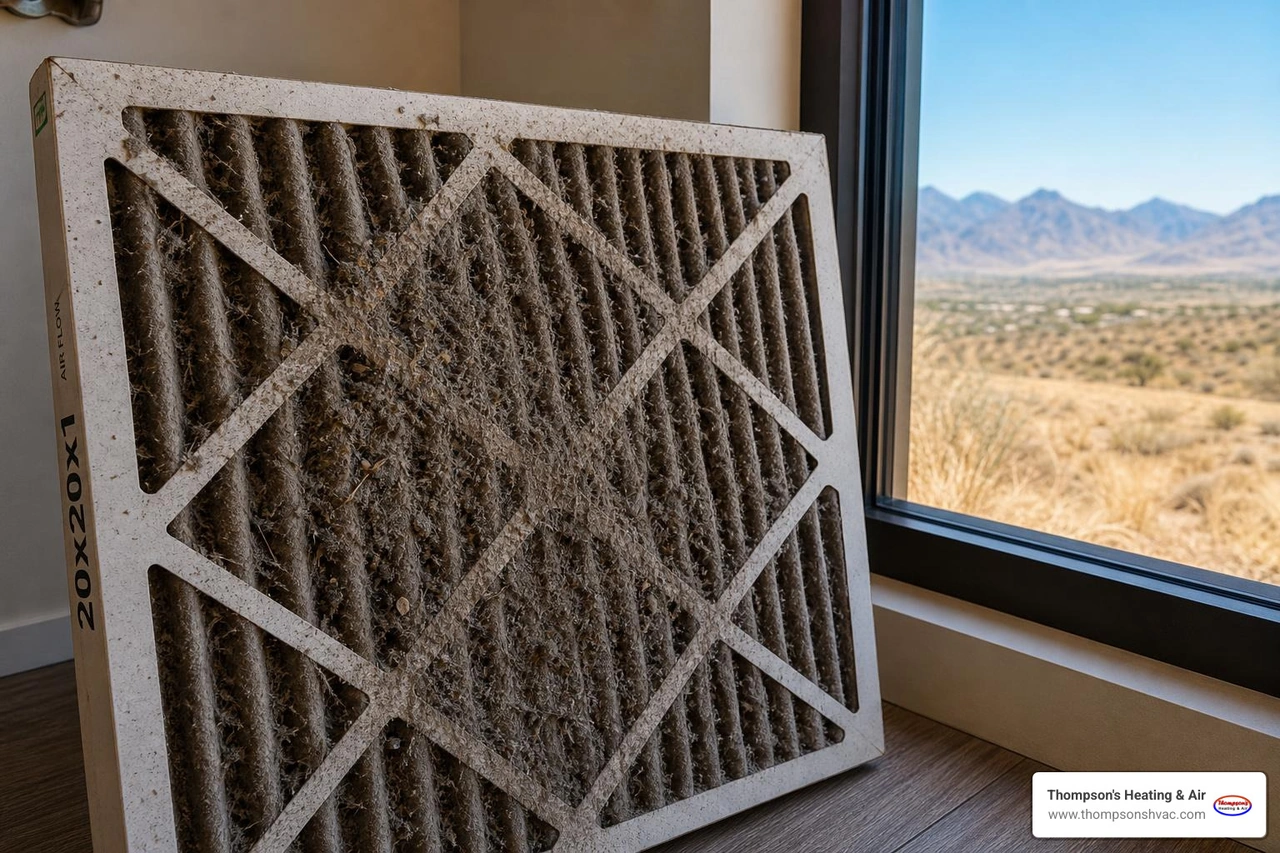
Even if you keep your windows tightly shut, this fine agricultural dust easily penetrates standard home envelopes through microscopic gaps in doors, windows, and construction joints. During harvest, filters that normally last a month can become completely caked with a thick, brown layer of silt in as little as two weeks.
Wildfire Smoke and How Hot Dry Valley Affects Filter Replacement Frequency
The dry heat of the valley, combined with seasonal north winds, creates prime conditions for regional wildfires. Wildfire smoke is composed of extremely fine particulate matter (PM2.5), ash, and oily chemical byproducts.
Unlike standard dust, which sits loosely on the surface of a filter, the microscopic, oily particles in wildfire smoke embed themselves deep within the fibers of your filter media. This creates a rapid, severe drop in airflow.
During an active smoke event, your filter acts as a critical line of defense for your lungs, but it sacrifices itself in the process. Inspecting your filter weekly during fire season and replacing it immediately once the outdoor air clears is essential to keep your system breathing.
The Consequences of Neglecting Filter Changes in High-Runtime Environments
Leaving a clogged filter in your system during a hot valley summer is a recipe for high utility bills and sudden system breakdowns. When a filter becomes loaded with dirt, the physical consequences cascade through your entire heating and cooling system.
Airflow Restriction and How Hot Dry Valley Affects Filter Replacement Frequency
Your HVAC system is designed to move a very specific volume of air (measured in cubic feet per minute, or CFM) to keep your home comfortable. A dirty filter increases static pressure, which is the resistance to airflow within your ductwork.
As static pressure rises, your blower motor has to work significantly harder to pull air through the blocked filter. This extra strain causes the motor to run hot, accelerating wear and tear and eventually leading to premature motor burnout.
Furthermore, when airflow is severely restricted, the cold air produced by your air conditioner's evaporator coil cannot be properly distributed throughout your home. Without warm indoor air blowing across the coil to balance the temperature, the refrigerant inside the coil drops below freezing.
Moisture in the air condenses on the cold metal and rapidly turns to ice, completely freezing up your system. If you notice your AC blowing warm air or see ice forming on the indoor copper lines, a clogged filter is often the prime suspect.
For more warning signs that your system is struggling, see our article on Signs Your AC Needs Repair. Additionally, frozen coils and restricted airflow can lead to excess moisture buildup inside your ductwork and air handler, creating a breeding ground for biological growth. Learn how to prevent this in our guide on Mold Prevention and Your HVAC System.
Efficiency Loss and Equipment Wear
Even before your system breaks down or freezes up, a dirty filter quietly drains your wallet. According to industry data, just 1/16th of an inch of dust accumulation on an evaporator coil can reduce your system's operating efficiency by over 20%.
Because the restricted airflow forces your system to run for much longer cycles to meet the thermostat setting, your energy consumption spikes. During a valley heat dome, a system with a clogged filter might run continuously for 10 to 12 hours without ever reaching your desired indoor temperature, driving your electric bills to record highs.
This extended runtime also puts immense stress on your compressor—the expensive heart of your outdoor unit. Overworking the compressor in extreme ambient temperatures (often exceeding 100°F) drastically shortens its lifespan, turning what should have been a 15-to-20-year system into one that fails in under a decade.
Investing in regular upkeep is the best way to avoid these costly issues. Discover how proactive care saves you money by reading about the Benefits of Regular HVAC Maintenance in Hot Dry Valley.
Choosing the Right Filter for Harsh Northern California Conditions
Selecting the right filter for a hot, dry valley home requires finding a careful balance between filtration efficiency and healthy airflow. Air filters are rated using the Minimum Efficiency Reporting Value (MERV) scale, which ranges from 1 to 16 for residential systems.
• Fiberglass Filters (MERV 1-4): These cheap, transparent filters are designed to catch large debris like pet hair and lint to protect the equipment, but they do almost nothing to stop fine valley dust, pollen, or smoke particles. The dust passes right through them and accumulates directly on your indoor coils.
• Pleated Filters (MERV 8-11): This is the sweet spot for most homes in Woodland, Davis, and surrounding areas. Pleated filters have significantly more surface area than flat fiberglass filters, allowing them to capture fine agricultural dust and mold spores without creating excessive resistance to airflow.
• High-MERV Filters (MERV 12-16): While these filters are excellent at capturing microscopic smoke and pet dander, their dense weave can create high static pressure in standard residential systems. Unless your system was specifically designed or modified to handle high-MERV filters, using them can restrict airflow so much that it mimics a clogged filter, leading to frozen coils or blower motor damage.
• The HEPA Myth: True HEPA filters are incredibly effective at removing 99.97% of particulates, but they should never be installed directly into a standard residential filter slot. Standard residential blower motors simply are not powerful enough to push air through a dense HEPA media, which will quickly lead to system failure. If you want HEPA-level filtration, a dedicated, bypass-style whole-house air purification system is the correct solution.
Balancing DIY Maintenance with Professional HVAC Care
Keeping your home comfortable in our harsh valley climate requires a team effort between you and your professional HVAC technician. While there are several critical tasks you can easily handle yourself, some maintenance steps require specialized tools and training.
DIY Tasks You Can Do Between Visits:
1. Check Your Filter Every 30 Days: Set a recurring reminder on your phone. Pull the filter out and hold it up to a light source. If you cannot see light passing through the filter media, it is time to replace it.
2. Maintain Clearance Around Your Outdoor Unit: Keep a clear zone of at least two feet around your outdoor condenser unit. Trim back weeds, shrubs, and agricultural debris that can block airflow.
3. Gently Rinse the Condenser Coil: Over the summer, fine valley dust coats the outdoor coils, acting like a warm blanket that traps heat inside your system. Gently spray the outdoor coils with a garden hose (never a pressure washer, which can bend the delicate aluminum fins) to wash away accumulated dirt.
For a comprehensive breakdown of what you can manage on your own, check out our guide on How to Maintain Your Heating and Cooling System.
When to Call the Pros:
While changing a filter is a simple DIY project, deep cleaning your indoor evaporator coils, checking refrigerant charge, testing electrical components, and verifying duct integrity should always be left to a licensed professional.
Scheduling professional maintenance twice a year—once in the spring before the intense summer heat, and once in the fall before winter arrives—ensures your system is running at peak efficiency.
To see what a complete professional tune-up looks like, read our Annual HVAC Maintenance Complete Guide.
Frequently Asked Questions about Valley Air Filtration
How often should I check my filter during Sacramento's harvest season?
During the peak of harvest season (typically late August through October), you should visually inspect your air filter every two weeks, especially if you live in rural agricultural zones like Esparto, Winters, or near the outskirts of Woodland and Dixon. The heavy volume of PM10 soil particles and organic debris generated by harvesting equipment can clog a filter twice as fast as normal household dust.
Can I use a HEPA filter to stop valley dust in a standard HVAC system?
No. Standard residential HVAC blower motors are not designed to handle the extreme airflow resistance (static pressure) created by a true HEPA filter. Installing a HEPA filter in a standard slot will restrict airflow, cause your system to work overtime, and likely lead to a frozen evaporator coil or a burned-out blower motor. Instead, stick to a high-quality pleated MERV 8 to 11 filter, or talk to us about installing a dedicated whole-home air purifier.
Does wildfire smoke require an immediate filter change?
Yes, but timing is key. During an active wildfire smoke event, your filter will quickly accumulate fine PM2.5 ash and oily residues. While you should monitor the filter during the event, you should always replace the filter immediately once the outdoor Air Quality Index (AQI) returns to healthy levels. This ensures that the oily, smoky residue trapped in the filter fibers isn't continuously restricting your system's airflow or releasing odors back into your home.
Conclusion
Living in the hot, dry Sacramento Valley means our heating and cooling systems work harder and face harsher environmental challenges than systems in almost any other part of the country. Understanding how hot dry valley affects filter replacement frequency is one of the simplest, most cost-effective ways to protect your home's comfort, lower your energy bills, and extend the life of your equipment.
At Thompson's Heating & Air, we have been helping our neighbors in Woodland, Davis, West Sacramento, and across Yolo County stay cool and breathe clean air since 1992. As a family-owned local business, we understand the unique climate challenges of our valley.
If you want to upgrade your home’s filtration system, or if your air conditioner is due for its seasonal tune-up, we are here to help. Explore our range of specialized Indoor Air Quality Products or contact us today to schedule your professional maintenance visit!



.avif)
.avif)
.png)
